Water resistance is an important feature to consider when choosing a watch. Whether you wear one every day, work outdoors, or enjoy swimming, understanding how your watch handles water can help you protect it from unnecessary damage.
However, watch water resistance can be confusing because ratings such as 3 ATM, 5 ATM, and 10 ATM do not always mean what people expect. A watch labelled water-resistant is not automatically suitable for every water-related activity.
This guide explains water-resistance ratings, common misconceptions, and practical ways to care for your watch.
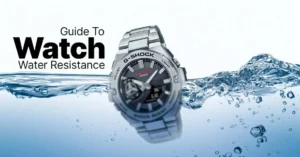
What Is Watch Water Resistance?
Watch water resistance refers to a watch’s ability to prevent water from entering its case under specified conditions.
The level of protection depends on factors such as the watch’s construction, seals, crown, crystal, and case back. Manufacturers test watches to determine their stated resistance ratings.
Water resistance is not necessarily permanent. Seals can deteriorate with age, impact, heat, or wear, so a watch’s protection may change over time.
It is important to check the manufacturer’s specifications rather than relying on appearance alone.
Watch Water Resistance Ratings Explained
Water-resistance ratings are commonly expressed in metres, bars, or atmospheres (ATM). These measurements describe pressure resistance under specified testing conditions. They should not be interpreted as a guaranteed safe swimming depth.
What Does 3 ATM or 30 Metres Mean?
A rating of 3 ATM, often shown as 30 metres, indicates a basic level of water resistance under the manufacturer’s test conditions.
Such watches may tolerate limited incidental splashes, depending on the manufacturer’s guidance, but they should not automatically be considered suitable for swimming or showering.
Always check the specific watch instructions before exposing it to water.
What Does 5 ATM or 50 Metres Mean?
A rating of 5 ATM, often shown as 50 metres, provides a higher level of pressure resistance than 3 ATM.
Some watches with this rating are suitable for swimming under the conditions specified by their manufacturers. However, this does not mean every 5 ATM watch is appropriate for all water activities.
Check the product specifications and avoid assuming that the rating guarantees suitability for diving or high-impact water sports.
What Does 10 ATM or 100 Metres Mean?
A rating of 10 ATM, often shown as 100 metres, indicates a higher level of water resistance.
Depending on the manufacturer’s specifications, watches with this rating may be suitable for swimming and certain recreational water activities. Their suitability for diving still depends on the watch’s intended use and applicable standards.
The rating alone should never replace the manufacturer’s activity-specific guidance.
Watch Water Resistance: 7 Essential Tips for Everyday Care
Following a few simple precautions can help maintain your watch and reduce the risk of water damage.
1. Check the Water-Resistance Rating Before Use
Before swimming, showering, or engaging in water-related activities, check the manufacturer’s instructions.
Do not assume that a watch is water-resistant simply because it has a metal case or a screw-down crown.
2. Keep the Crown Properly Secured
The crown is one of the areas through which water can enter if it is not secured correctly.
If your watch has a screw-down crown, make sure it is fully secured according to the manufacturer’s instructions before exposing it to water.
Never operate the crown or pushers underwater unless the manufacturer specifically permits it.
3. Avoid Hot Water and Steam
Hot showers, saunas, and steam rooms can expose a watch to temperature changes and conditions that may affect its seals.
Even a watch with a suitable water-resistance rating may not be designed for hot water or steam exposure.
The safest approach is to follow the manufacturer’s recommendations and remove your watch before activities involving substantial heat or steam.
4. Understand the Difference Between Splash Resistance and Swimming Suitability
Occasional splashes are different from continuous immersion.
Swimming also involves movement and changing water pressure, while diving introduces additional demands. A rating that is adequate for one activity may not be suitable for another.
Choose a watch based on the activities you actually plan to do.
5. Take Extra Care With Leather Straps
Water resistance applies to the watch itself, not necessarily to its strap.
Leather straps can absorb moisture, which may cause discolouration, stiffness, odour, or premature deterioration.
If your watch has a leather strap, avoid unnecessary water exposure and follow the manufacturer’s care instructions.
6. Check Your Watch’s Seals Periodically
Gaskets and seals help prevent water from entering the watch case. Over time, they can wear out or become less effective.
If your watch is older, has been damaged, or will be used regularly in water, consider having its water resistance checked by a qualified watch service professional.
A previous water-resistance rating does not guarantee that the watch remains equally protected today.
7. Rinse and Dry Your Watch When Appropriate
After exposure to salt water or chlorinated water, follow the manufacturer’s cleaning instructions. If the watch is rated for the exposure, rinsing it gently with fresh water may help remove residue.
Dry the exterior with a soft cloth. Do not rinse or immerse a watch unless its stated water resistance and manufacturer guidance permit it.
Salt and chlorine can affect some watch materials and finishes, so proper care is important.
Can You Wear a Water-Resistant Watch Every Day?
Many water-resistant watches are designed for everyday use, but their suitability depends on the rating, construction, condition, and manufacturer’s instructions.
For daily wear, consider the situations in which you might encounter water, such as washing your hands or being caught in the rain.
If you regularly swim or participate in water sports, choose a watch specifically rated for those activities. For diving, use a watch designed and rated for the intended type of diving.
Remember that water resistance does not automatically mean resistance to every environmental condition.
What Should You Do if Water Enters Your Watch?
If you notice condensation beneath the crystal or suspect that water has entered your watch, seek professional servicing promptly.
Avoid operating the crown or pushers unnecessarily, and follow the manufacturer’s instructions for handling a potentially water-damaged watch.
Do not assume that visible moisture will disappear without consequences. A professional can inspect the watch and determine the appropriate next steps.
Final Thoughts on Watch Water Resistance
Understanding watch water resistance helps you choose a timepiece that suits your lifestyle and care for it properly.
Ratings such as 3 ATM, 5 ATM, and 10 ATM indicate different levels of tested pressure resistance, but they are not simple guarantees of safe depth. The watch’s construction, current condition, and intended use all matter.
Before exposing a watch to water, check the manufacturer’s specifications, protect the seals, and follow the recommended care instructions. A few sensible precautions can help you enjoy your watch while reducing the risk of avoidable damage.
Know more about: The Tick of Time: Why the Mechanical Watch Outlived Its Own Obsolescence